
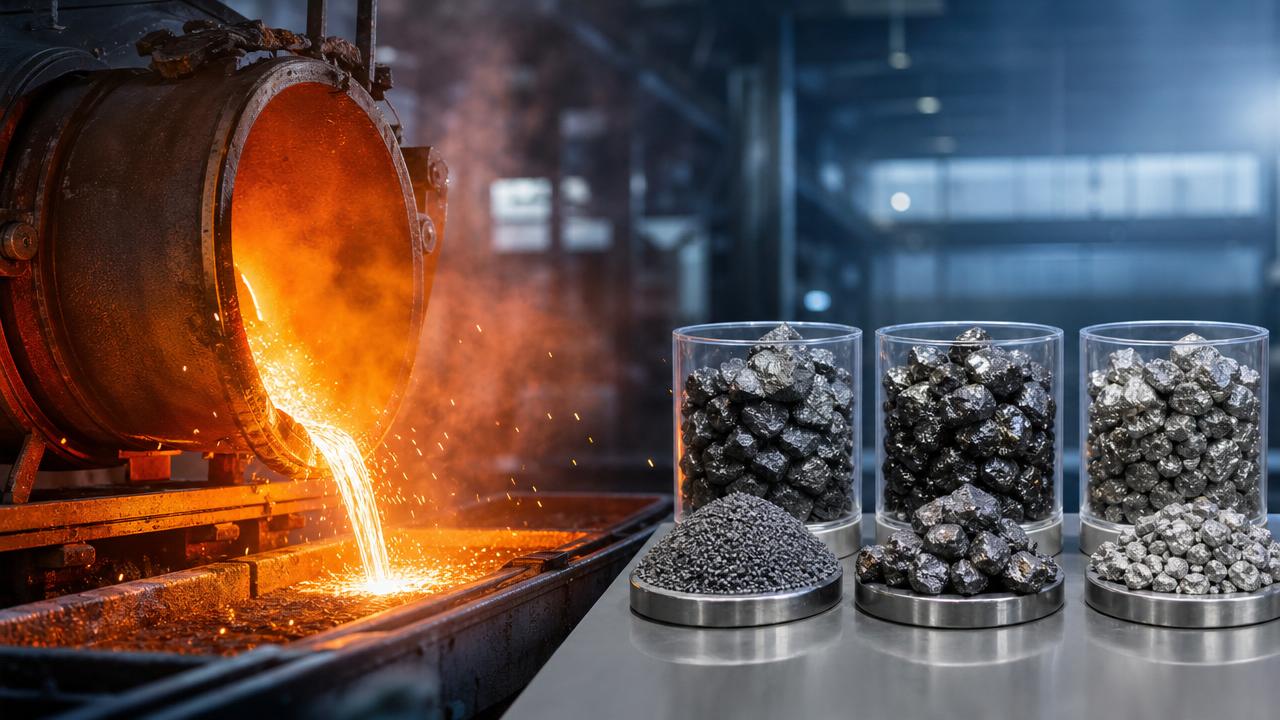
Chemical catalysis plays a vital role in modern metal refining, helping producers improve reaction efficiency, reduce energy consumption, and enhance product purity.
For mineral and metallurgical processes, catalytic materials influence smelting, deoxidation, impurity removal, alloy stability, and downstream performance.
As ferroalloys, silicon alloys, and rare earth minerals gain importance, chemical catalysis supports cleaner, more stable, and more cost-effective refining operations.
What Does Chemical Catalysis Mean in Metal Refining?
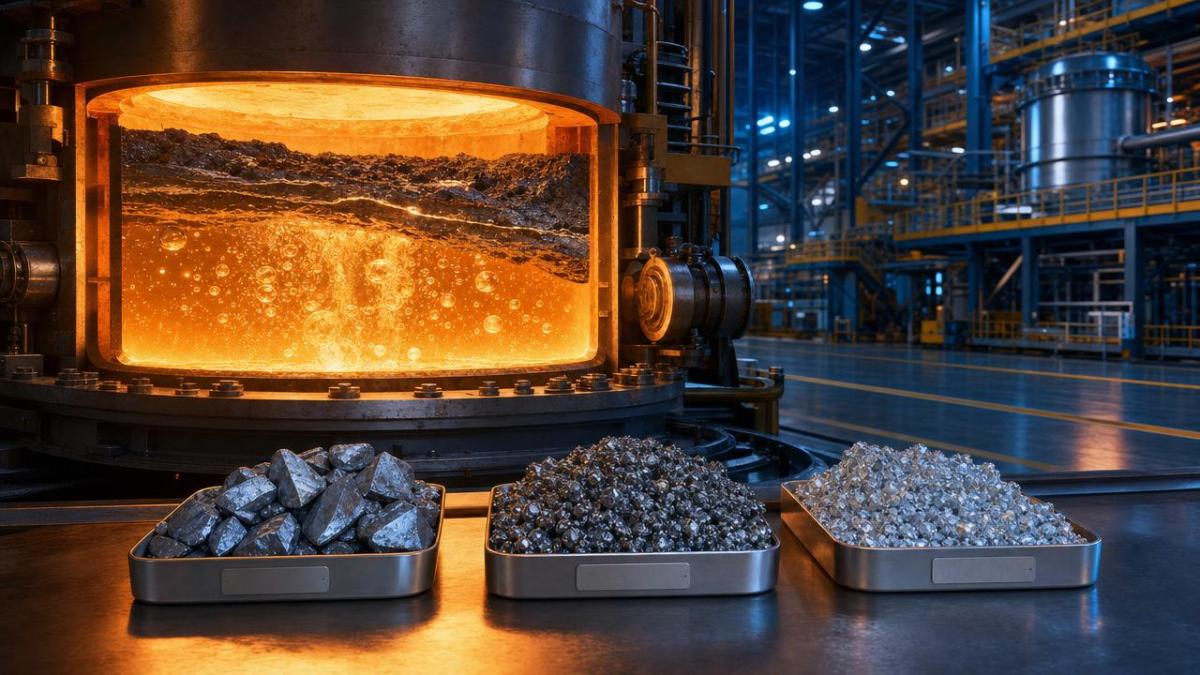
Chemical catalysis refers to using specific substances to accelerate or guide reactions without being fully consumed during the process.
In metal refining, this can involve ferroalloys, silicon-based additives, rare earth elements, flux systems, or reactive mineral compounds.
The goal is not only faster reaction speed. Chemical catalysis also improves selectivity, temperature control, and impurity separation.
For example, silicon-bearing alloys can promote deoxidation in steelmaking and help create cleaner molten metal.
Rare earth minerals may modify inclusions, improve fluidity, and support better microstructure control in demanding alloy systems.
In this context, chemical catalysis becomes a practical tool for improving refining efficiency and final material consistency.
Why Is Chemical Catalysis Important for Smelting and Deoxidation?
Smelting involves high-temperature reactions where ores, reductants, fluxes, and alloying materials interact under controlled conditions.
Chemical catalysis helps these reactions proceed more effectively, especially when oxygen, sulfur, phosphorus, or non-metallic inclusions must be controlled.
In steel refining, deoxidation is one of the clearest examples. Ferrosilicon and silicon metal react with dissolved oxygen.
The reaction forms oxides that can rise into slag, improving steel cleanliness and reducing defect risks.
Chemical catalysis also supports lower reaction barriers, which may reduce excessive holding time or overheating.
That matters because prolonged thermal exposure can increase energy consumption and affect alloy composition stability.
- Faster deoxidation response in molten steel.
- More stable slag-metal separation.
- Lower inclusion-related defect probability.
- Improved alloy recovery and yield control.
For stainless steel, ferrochrome and silicomanganese also influence reaction balance, oxidation behavior, and final chemistry.
Proper chemical catalysis selection can therefore support both metallurgical performance and operational economy.
Which Materials Are Commonly Used for Catalytic Refining Effects?
Different refining targets require different catalytic or reactive materials. Selection depends on metal type, impurity profile, temperature, and process route.
Ferrosilicon is widely used where strong deoxidation and silicon adjustment are needed in steel production.
Silicomanganese combines manganese and silicon effects, supporting deoxidation, desulfurization assistance, and mechanical property adjustment.
Ferrochrome contributes chromium while helping stainless systems meet corrosion resistance and alloy specification targets.
Silicon metal is important in aluminum alloys, chemical processing, and advanced material applications.
Rare earth silicon and specialty casting additives can refine grains, modify inclusions, and improve casting quality.
Sinometal focuses on high-end ferroalloys, silicon alloys, and rare earth minerals for these demanding metallurgical applications.
Its product range supports steel deoxidation, casting inoculation, chemical catalysis, and new energy material processing.
How Does Chemical Catalysis Improve Purity, Yield, and Energy Use?
Chemical catalysis improves refining outcomes by making essential reactions more predictable and efficient.
When oxygen removal is faster, molten metal spends less time at extreme temperatures.
Shorter processing windows can reduce energy demand, refractory wear, and unwanted element loss.
Better impurity conversion also improves separation between slag and metal, which is critical for purity control.
In alloy production, the benefit is not limited to chemistry. Microstructure and performance also depend on reaction control.
For aluminum alloy, silicon metal can influence fluidity, strength, and casting behavior.
For stainless steel, stable ferrochrome quality helps maintain chromium recovery and corrosion resistance.
For new energy materials, chemical catalysis may support cleaner precursors and more consistent material performance.
- Identify target impurities and required final chemistry.
- Match catalytic additives with temperature and furnace route.
- Control particle size, feeding method, and reaction timing.
- Measure recovery rate, slag behavior, and inclusion changes.
This approach turns chemical catalysis from a theoretical concept into a measurable refining advantage.
What Risks or Misunderstandings Should Be Avoided?
One common misunderstanding is treating chemical catalysis as a universal solution for every refining problem.
In practice, the wrong additive can increase slag volume, reduce yield, or create unwanted inclusions.
Another risk is ignoring material consistency. Variations in composition, size, moisture, or impurity levels affect reaction reliability.
Catalytic performance also depends on process conditions, not only chemical composition.
Temperature, stirring intensity, furnace atmosphere, and feed sequence can change reaction results significantly.
Reliable testing, supplier documentation, and process feedback are essential before scaling any chemical catalysis change.
How Should Refining Operations Choose Catalytic Materials?
The first step is to define the refining objective clearly. Common targets include deoxidation, desulfurization support, inclusion modification, or alloy recovery.
The second step is matching product chemistry with metallurgical conditions and final performance requirements.
For high-cleanliness steel, ferrosilicon grade, aluminum content, and particle size should be evaluated carefully.
For casting applications, rare earth silicon or inoculants may be selected for microstructure and defect control.
For stainless steel, ferrochrome quality influences chromium recovery, carbon control, and corrosion performance.
A good selection process compares more than unit price. It considers yield, consistency, logistics, and technical support.
- Review certificate data and impurity limits.
- Confirm particle size compatibility with feeding systems.
- Run controlled trials before full-scale adoption.
- Track metal recovery, energy use, and defect rates.
Sinometal supplies ferrosilicon, silicomanganese, ferrochrome, silicon metal, rare earth silicon, silicon granules, and specialty casting additives.
These materials support chemical catalysis across steel, aluminum alloy, stainless steel, chemical, and new energy applications.
Conclusion: Turning Chemical Catalysis into Refining Value
Chemical catalysis helps metal refining become cleaner, faster, and more predictable when supported by the right material strategy.
Its value appears in deoxidation efficiency, impurity removal, alloy recovery, energy savings, and product purity.
The best results come from combining suitable ferroalloys, silicon alloys, rare earth minerals, and disciplined process control.
To move forward, define the refining challenge, compare material specifications, and test chemical catalysis performance under real operating conditions.
For advanced metallurgical applications, Sinometal provides high-end alloy and mineral solutions designed for stable, efficient, and practical refining improvement.
Related Posts
Online Message
GET IN TOUCH