
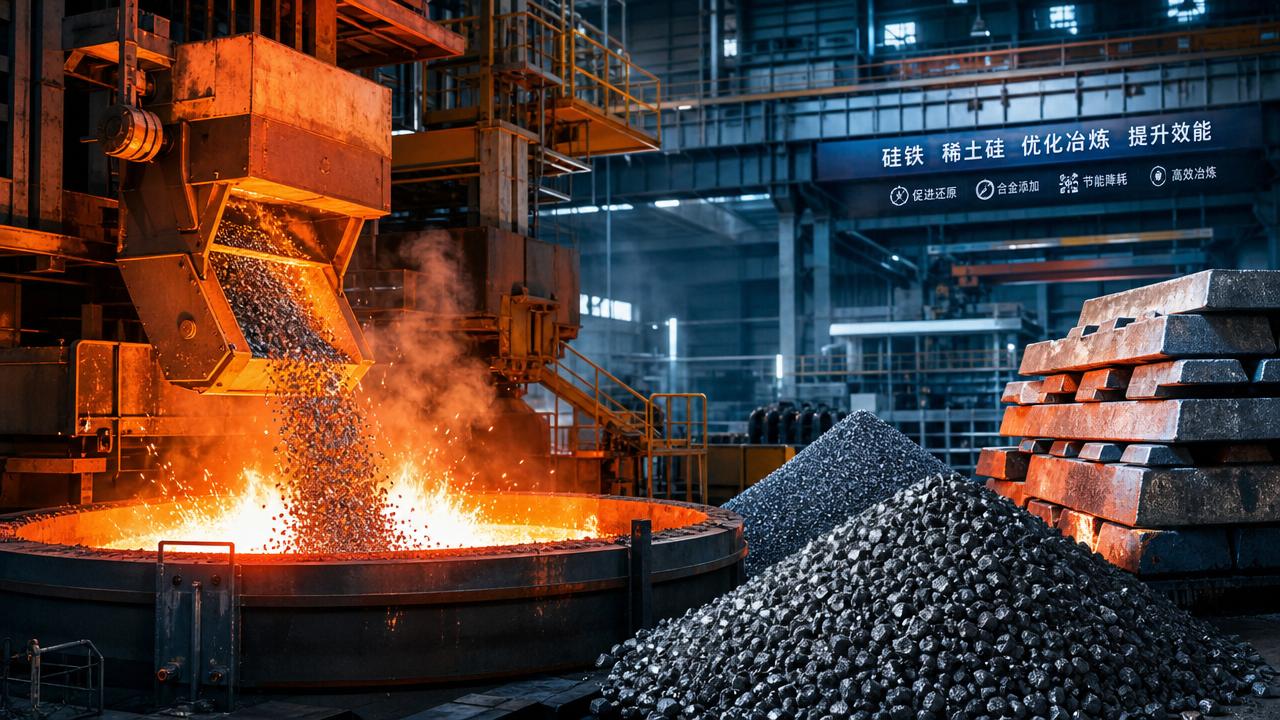
How Chemical Catalysis Cuts Smelting Energy Use
Rising power costs and tighter carbon targets are reshaping smelting economics across steel, aluminum alloy, stainless steel, and specialty materials.
Chemical catalysis offers a practical route to lower reaction temperatures, accelerate reduction, and improve furnace energy utilization without sacrificing metal quality.
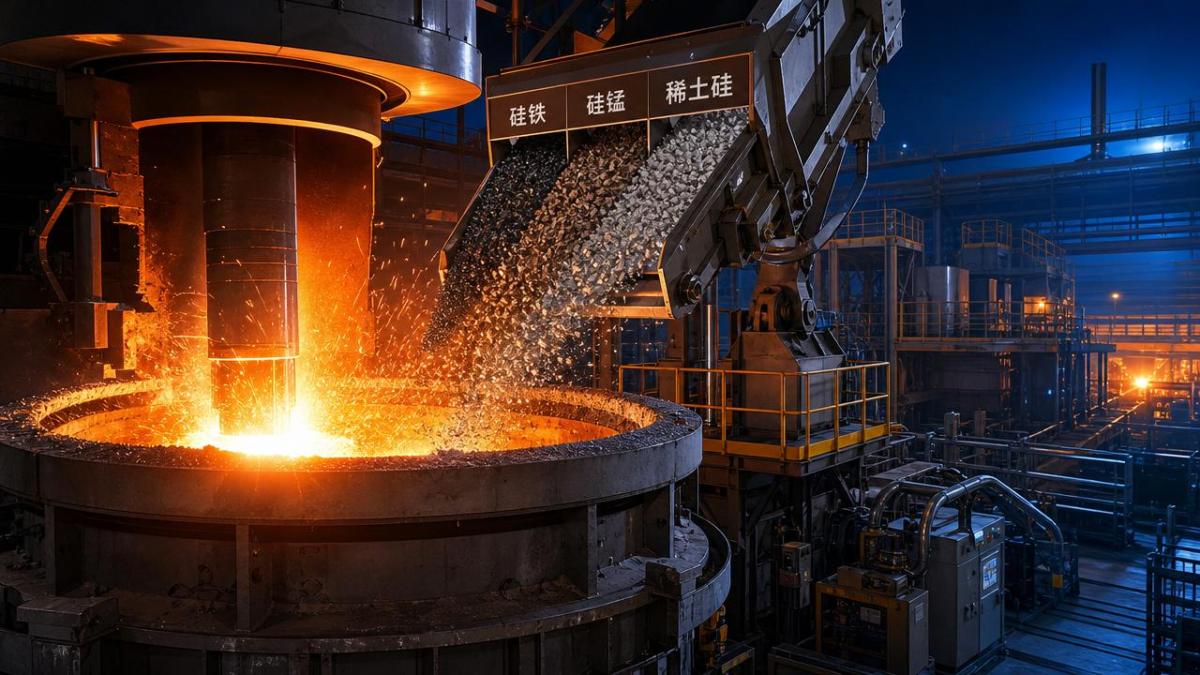
In metallurgical operations, catalytic additives, ferroalloys, silicon alloys, and rare earth inputs can influence slag behavior, oxygen removal, and reaction kinetics.
Sinometal supports these applications with ferrosilicon, silicomanganese, ferrochrome, silicon metal, rare earth silicon, silicon granules, and specialty casting additives.
Why Smelters Need a Checklist for Chemical Catalysis
Energy reduction is rarely achieved by one adjustment. Furnace temperature, charge chemistry, slag composition, and alloy addition timing all interact.
A checklist helps connect chemical catalysis with measurable operating parameters, not just laboratory claims or isolated trial results.
It also prevents hidden trade-offs, such as faster reduction but higher inclusion risk, unstable slag, or inconsistent final alloy recovery.
The goal is controlled energy savings, repeatable metal quality, and a process window suitable for daily furnace operation.
Core Checklist for Applying Chemical Catalysis in Smelting
- Define the energy baseline by recording kWh per ton, furnace temperature profile, tap-to-tap time, alloy recovery, and slag volume before catalytic changes.
- Map the main reaction bottleneck, including oxide reduction, carbon reaction, slag viscosity, oxygen removal, or alloy dissolution within the molten bath.
- Select catalytic inputs that match the furnace chemistry, such as silicon alloys, rare earth silicon, or specialty additives for targeted reaction acceleration.
- Control particle size and dosing location, because chemical catalysis performs better when additives disperse quickly and contact reactive interfaces efficiently.
- Adjust addition timing around melt stage, slag formation, and deoxidation sequence to avoid premature oxidation or poor additive utilization.
- Track slag fluidity, basicity, and inclusion behavior, since catalytic effects can be reduced when slag chemistry blocks mass transfer.
- Verify final composition stability, especially silicon, manganese, chromium, rare earth elements, oxygen, sulfur, and residual trace elements.
- Compare trial results over several heats, not one furnace run, to separate chemical catalysis gains from normal production variation.
Where Chemical Catalysis Creates the Highest Energy Impact
Steel Deoxidation and Alloy Recovery
In steelmaking, chemical catalysis supports faster oxygen removal and more stable alloy dissolution during refining and ladle treatment.
Ferrosilicon and silicon granules can improve deoxidation efficiency when addition practice, bath stirring, and slag condition are aligned.
The energy benefit comes from shorter holding time, reduced reheating demand, and fewer corrective alloy additions before casting.
Stainless Steel and Ferrochrome Reduction
For stainless steel routes, reduction efficiency strongly affects chromium yield, slag volume, and electrical energy consumption.
Chemical catalysis can support faster oxide reduction when ferrochrome quality, carbon balance, and slag basicity are properly controlled.
A stable reaction path lowers excessive superheating and helps maintain predictable chromium recovery across different charge mixes.
Aluminum Alloy and Silicon-Based Inputs
In aluminum alloy production, silicon metal and silicon-based additives influence melt quality, alloying speed, and temperature management.
Chemical catalysis is most valuable when it reduces dissolution delays and limits unnecessary thermal compensation during alloy correction.
Consistent silicon purity and controlled granule size help reduce variation in melting response and final alloy composition.
Casting Inoculation and Rare Earth Treatment
Rare earth silicon and specialty casting additives can modify nucleation behavior, inclusion shape, and solidification performance.
Although this is not only an energy issue, improved reaction efficiency reduces holding time and supports more stable casting operations.
Chemical catalysis should be evaluated together with casting defects, mechanical properties, and post-treatment requirements.
Common Overlooked Risks in Catalytic Smelting
Treating Additives as Direct Substitutes
A catalytic additive does not automatically replace standard alloy input. Its effect depends on chemistry, dosage, timing, and furnace practice.
Unverified substitution can create composition drift, weaker deoxidation, or poor recovery, even when energy readings appear improved.
Ignoring Slag as a Reaction Barrier
Chemical catalysis needs access to reactive phases. Thick, viscous, or poorly balanced slag can slow contact and reduce catalytic performance.
Slag testing should accompany energy trials, especially when oxide reduction and metal-slag transfer define the process bottleneck.
Measuring Only Furnace Power
Lower power per heat is useful, but it is incomplete without yield, tap temperature, rework rate, and final chemistry data.
A reliable chemical catalysis program links electrical savings with total metal value, not only short-term meter readings.
Overlooking Raw Material Consistency
Catalytic performance changes when alloy purity, moisture, particle size, or trace impurities fluctuate between batches.
Stable ferroalloy and silicon alloy supply is essential for repeatable smelting energy reduction and predictable process control.
Practical Execution Plan for Energy Reduction
- Start with one furnace line, one alloy family, and one defined energy target to keep the chemical catalysis trial focused.
- Prepare a controlled additive schedule that specifies grade, particle range, dosing point, batch quantity, and expected reaction stage.
- Collect paired production data, including power demand, process time, tap temperature, chemistry, slag condition, and yield.
- Review deviations after each heat and adjust only one major factor at a time to identify the real performance driver.
- Scale only after repeatable savings appear across multiple heats, charge conditions, and operator shifts.
Sinometal’s product range supports this structured approach across steel deoxidation, casting inoculation, chemical catalysis, and new energy material applications.
Ferrosilicon, silicomanganese, ferrochrome, silicon metal, rare earth silicon, and silicon granules can be matched to specific metallurgical objectives.
The strongest results come when material selection is linked with furnace data, metallurgical testing, and practical operating constraints.
Summary and Next Steps
Chemical catalysis cuts smelting energy use by improving reaction speed, lowering thermal demand, and increasing useful recovery from alloy additions.
It works best as a controlled metallurgical program, not as a single additive purchase or isolated furnace adjustment.
Begin with baseline data, identify the reaction bottleneck, select suitable ferroalloy or silicon alloy inputs, and verify results across repeated heats.
For smelting operations seeking lower power intensity and stable product quality, chemical catalysis provides a practical path toward measurable efficiency gains.
Related Posts
Online Message
GET IN TOUCH